
A first visit to the Yellowknife region rewards careful planning, especially when transportation and late-night activities are involved. Start with the experience that matters most, then build your dates, accommodation, and local travel around it. This approach is more reliable than booking a flight first and trying to fit everything into the remaining gaps.
- Choose your dates according to your main experience, then confirm current seasonal conditions with official territorial sources.
- Allow at least one flexible period for weather changes, delayed transportation, or a rescheduled outing.
- Yellowknife Transit has three regular routes and operates Monday through Saturday, with no Sunday or statutory holiday service.
- Public buses stop running in the evening, so late-night aurora outings require another transportation plan.
- Reserve specialized transportation, guided outings, taxis, or a rental vehicle early when your itinerary extends beyond central daytime trips.
The biggest first-timer mistake is treating every part of the trip as equally flexible. Local bus service has defined operating days and hours, while aurora-related travel often happens later. A workable itinerary separates daytime exploration from evening transportation and leaves enough space to adapt if plans shift.

Yellowknife: Autumn Aurora Complete | 4 Days / 3 Nights | Bus
A structured 4-day/3-night shared Yellowknife autumn package with airport transfers, two mobile aurora hunts, one stationary aurora-viewing camp, and...

Yellowknife: Winter Aurora Complete | 4 Days / 3 Nights | Bus
A structured 4-day/3-night shared Yellowknife package with airport transfers, winter gear rental, two mobile aurora hunts, one stationary aurora-viewi...
Build the trip around one clear priority
Begin by naming the main reason for your visit. It could be an aurora-focused outing, a daylight-centered trip, a particular guided activity, or time with friends and family. That decision influences your travel dates, daily rhythm, transportation needs, and tolerance for schedule changes.
Aurora-focused plans need special attention because municipal transit does not run late into the night. If a booked outing includes transportation, review its meeting point and pickup details before choosing accommodation. If transportation is not included, arrange a taxi, rental vehicle, or another dependable option rather than expecting the city bus to cover the return journey.
Travelers who prefer organized logistics can compare the site's Yellowknife tours overview while shaping the itinerary. Check the activity description for transportation, meeting location, duration, accessibility, cancellation terms, and included equipment. Exact arrangements depend on the operator and package selected.
Separate essential plans from optional plans
Place the experience that motivated the trip near the beginning, but avoid stacking every important reservation into the same day. Keep optional activities for the flexible parts of the schedule. This gives you room to respond to changing conditions without losing the entire itinerary.
- Reserve the main experience and note its meeting point and transportation requirements.
- Choose accommodation that works with those logistics.
- Confirm how you will travel during the day and after bus service ends.
- Add secondary activities that can move between days.
- Protect a final buffer before departure.
Choose travel dates by experience, not by a generic best month
There is no single set of dates that suits every first visit. Someone planning around dark skies has different needs from a traveler seeking long hours of daylight. Decide which conditions matter to you, then check current tourism information, sunrise and sunset times, weather forecasts, and activity schedules for the exact dates under consideration.
Avoid relying on a broad seasonal label alone. Conditions can affect roads, outdoor activities, visibility, and operator schedules. Before committing to nonrefundable arrangements, consult current Northwest Territories weather, emergency, and road-condition information. Recheck those sources shortly before departure as well.
Questions to answer before selecting dates
- Does your preferred activity operate on those exact dates?
- How much darkness or daylight will occur during the hours you plan to be outside?
- Will you need a rental vehicle, tour transfer, or taxi after municipal transit ends?
- Are your flight, lodging, and activity reservations flexible if conditions change?
- Which official weather, emergency, and road sources will you monitor before travel?
Treat wildfire, road, and ice-road information as time-sensitive. Do not build a route around assumptions taken from an older travel story or a previous season. Official territorial updates are the appropriate place to confirm conditions that could affect safety or access.
Decide how many days to spend in Yellowknife
Three to four days is a useful starting framework for a first itinerary, although it is not a promise that every plan will fit. It gives you an arrival period, one or two substantial activity days, and some flexibility. Add time if your main experience depends heavily on weather or if you intend to travel beyond the fixed-route transit network.
| Trip length | Best suited to | Main limitation |
|---|---|---|
| Two days | A focused visit with one prearranged priority | Little room for delays or rescheduling |
| Three days | One main outing plus central daytime exploration | Requires disciplined scheduling |
| Four days | A first visit with a useful weather or logistics buffer | Higher lodging and meal costs |
| Five or more days | Several activities or travel beyond central routes | More advance transportation planning |
Count arrival and departure days honestly. A late arrival is not a full sightseeing day, particularly if you still need to collect luggage, reach your accommodation, eat, and prepare for a scheduled outing. Keep the first evening simple unless every transfer has already been arranged.
The same principle applies before departure. Avoid placing an activity with uncertain completion time immediately before a flight. A modest buffer is less exciting on paper, but it makes the whole plan easier to manage.

2 - Night Aurora Quest with Glass Tipi Experience
Witness the Northern Lights in Yellowknife from the comfort of a heated cabin or a stunning glass tipi. This two-nig...

2 Days Aurora Experience in Yellowknife
This aurora experience is designed for travellers who want maximum results in minimum time. Over just two nights, yo...

Yellowknife 4 Days 3 Nights Aurora Hunting with Airport Service
⭐ Why This Itinerary Works • Three nights = higher aurora success rate • Flexible routes based on real-time...
Confirm arrival transportation before leaving home
Check current airline and Yellowknife Airport information directly while booking. Confirm the arrival time, baggage rules, accessibility procedures, and the transfer between the airport and your accommodation. Rental availability and ground-transport arrangements should also be checked for the exact date rather than inferred from an older visitor guide.
Send your accommodation the arrival details when its policies require advance notice. If you are joining an activity soon after landing, compare the scheduled arrival with baggage collection, transfer time, check-in, and the activity's meeting instructions. Leave enough room for a routine delay.
Keep essential arrival details together
- Flight number and scheduled arrival time
- Accommodation name and check-in instructions
- Confirmed airport transfer plan
- Rental collection details, if applicable
- First activity's meeting point and contact instructions
- Offline copies of critical confirmations
Understand Yellowknife public transit before relying on it
Yellowknife has three regular municipal transit routes. Buses operate approximately 7:00 a.m. to 7:45 p.m., Monday through Saturday, throughout the year. There is no regular service on Sundays or statutory holidays. Check the City schedule again before travel because service information can change.
The City directs riders to its route information and the PassioGO! app for live vehicle tracking. It also advises passengers to reach the stop five minutes before the scheduled departure. Use the tracker and current service notices on the day of travel, but still build a buffer before reservations and departures.
Current Yellowknife Transit fares
| Fare type | Listed cost | Planning note |
|---|---|---|
| Single cash fare or ticket | CAD 2 | Bring exact change when paying cash |
| 10-ride pass | CAD 18 | Useful only if the number of planned trips justifies it |
| 31-day pass | CAD 75 | Designed for longer or frequent use |
Bus drivers do not provide change for cash fares. Count the number of realistic daytime journeys before purchasing a pass, and remember that a bus pass does not solve evening, Sunday, or statutory-holiday transportation.
Can you visit Yellowknife without a car?
Yes, a car-free visit can work for selected central daytime trips. The main limitations are the evening cutoff and the lack of Sunday and statutory-holiday service. Public transit also does not necessarily align with aurora-tourism schedules or every dispersed attraction.
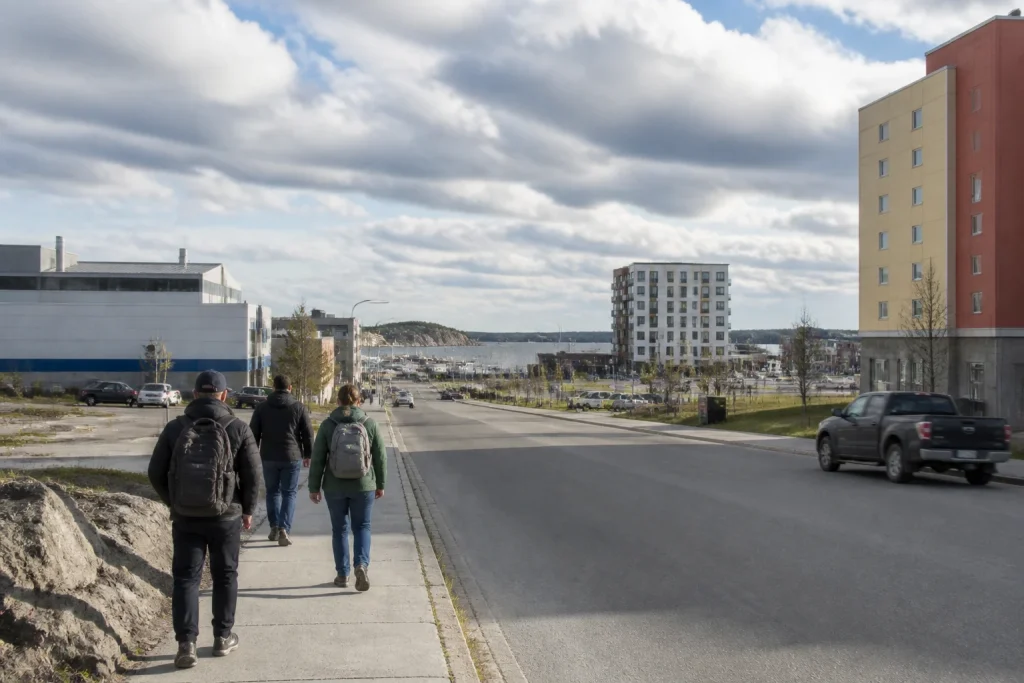
A successful car-free itinerary usually combines several transportation methods. Use buses for suitable daytime journeys, then arrange operator transportation or taxis for activities outside transit hours. Choose accommodation only after comparing its location with your confirmed meeting points and likely routes.
| Transportation option | Useful for | Watch for |
|---|---|---|
| Municipal bus | Eligible daytime trips from Monday through Saturday | Limited hours and no Sunday or statutory-holiday service |
| Operator transportation | Activities with included or arranged transfers | Pickup area and timing depend on the booking |
| Taxi | Point-to-point trips outside bus hours | Availability and cost should be planned in advance |
| Rental vehicle | Independent travel beyond convenient transit coverage | Current availability, road conditions, and rental terms |
When a rental vehicle becomes more useful
Consider a rental when several planned stops sit outside practical transit coverage, when your schedule begins early or ends late, or when Sunday travel is essential. Compare the total rental cost with taxis and included tour transportation. Check current road conditions and the rental agreement before committing to a route.
Plan accessible transportation well in advance
The City announced in 2024 that its eight-bus fixed-route fleet would be fully wheelchair accessible. Because equipment and service conditions can change, confirm the accessibility of the required route and trip with the City before relying on it. Real-time service should also be reviewed near departure.
YKFlex provides door-to-door specialized transit for registered users who cannot safely and with dignity use fixed-route buses because of a temporary or permanent physical or functional disability. Registration requires an application signed by a health-care professional, so it is not a dependable last-minute visitor solution.
YKFlex trips can be reserved up to seven days ahead and normally no later than 3:00 p.m. on the day before travel. Visitors who need accessible transportation should begin planning before departure and confirm arrangements for every major transfer, including arrival, accommodation, activities, and the return journey.
Still comparing Yellowknife First Time Trip Planning?
Ask for tour ideas, hotel suggestions, or a simple trip plan that combines both.
Trip Helper
Create a realistic Yellowknife trip budget
Build the budget in layers instead of guessing one daily total. Start with transportation to Yellowknife and accommodation. Add reserved activities, local transportation, meals, equipment or clothing needs, and a contingency amount. This makes it easier to see which choices are fixed and which can be adjusted.
- Transportation to and from Yellowknife
- Accommodation and any applicable booking conditions
- Guided activities and optional equipment
- Airport and local ground transportation
- Meals and personal purchases
- Contingency funds for schedule or transportation changes
Public transit is one cost that can be estimated from published fares. A single ride is listed at CAD 2, while the 10-ride pass is CAD 18. Do not assume buses will cover the entire trip simply because the fare is low. Evening and Sunday plans can add separate transportation costs.
When comparing lodging, look beyond the nightly rate. A less convenient location can require more paid transportation or add risk before scheduled departures. A practical base is one that works with your confirmed activities, transit hours, and late-night travel plan.
Pack for the forecast and the activity schedule
Check the current forecast shortly before packing and match clothing to the hours you expect to be outside. A long nighttime outing can require different preparation from a short daytime transfer. Follow the equipment and clothing guidance supplied by your activity provider instead of relying on a generic seasonal list.

- Weather-appropriate layers that can be adjusted during the day
- Footwear suited to the current ground and activity conditions
- Medication and essential personal supplies
- Portable power for a phone used for confirmations and live transit tracking
- Offline copies of reservations and meeting instructions
- A small bag that keeps critical items accessible during transfers
Keep batteries and essential electronics ready before a long outing. Download or capture meeting instructions while you have a dependable connection. For bus travel, check PassioGO! and service notices close to departure, then arrive at the stop at least five minutes early.
Use this four-day framework for a first visit
Day 1: Arrive and learn the immediate area
Keep the arrival day manageable. Check in, review the next day's meeting point, and identify the transportation needed to reach it. If you plan to use the bus, confirm the nearest suitable stops and current schedule. Avoid an ambitious evening booking unless the transfer has been arranged with enough buffer.
Day 2: Schedule the main experience
Use the second day for the activity that motivated the trip. Confirm pickup or meeting instructions beforehand and keep the hours immediately before it relatively open. If it ends after municipal transit stops, have the return journey arranged before leaving your accommodation.
Day 3: Add a second outing or use the buffer
Reserve this day for a second priority, a flexible guided outing, or a rescheduled activity. Daytime bus journeys are possible when the route and operating day fit, but recheck live information before setting out. Keep evening transportation separate from the bus plan.
Day 4: Leave space before departure
Use the final hours for a simple activity close to your accommodation or departure route. Confirm the airport transfer and flight information before checking out. Avoid a distant outing unless the timing and return transportation are firmly arranged.
Yellowknife: Autumn Aurora Complete | 4 Days / 3 Nights | Bus
A structured 4-day/3-night shared Yellowknife autumn package with airport transfers, two mobile aurora hunts, one stationary aurora-viewing camp, and...
Yellowknife: Winter Aurora Complete | 4 Days / 3 Nights | Bus
A structured 4-day/3-night shared Yellowknife package with airport transfers, winter gear rental, two mobile aurora...
Northern Lights Tour Yellowknife
Wonderful and Amazing experience while going through the famous Ingraham trail to view the Northern Lights in our bu...
A strong Yellowknife itinerary is not the one with the most reservations. It is the one in which every important reservation has enough time and transportation around it.


Yellowknife: Winter Aurora Complete | 4 Days / 3 Nights | SUV
A private SUV version of the complete 4-day/3-night Yellowknife winter package for one group of up to six guests. It...

Yellowknife Aurora Hunting Tours by Bus
Our expert guides are not only knowledgeable but also passionate about sharing their love for the Northern Lights wi...

Yellowknife: Aurora Chasing + Aurora Lodge
The best of both worlds, Aurora Chasing and Aurora Lodge! This is the Aurora Tour that allow you to have the cake an...
Make transportation the final check before departure
Yellowknife works best for first-time visitors who plan around one clear priority and treat transportation as part of the experience rather than an afterthought. Public buses can support central daytime travel, but limited hours and service days make a backup plan essential for late outings and Sunday activities.
Before leaving home, reconfirm arrival transportation, the main activity, current conditions, and every late return. Then keep part of the itinerary flexible. That combination provides structure without making the trip brittle when weather or schedules change.
Frequently asked questions
How many days should a first-time visitor spend in Yellowknife?
Three to four days is a practical starting framework for a first visit. It provides time for one main experience, another activity, and some flexibility, although weather-dependent or regional plans can justify a longer stay.
Can you visit Yellowknife without renting a car?
Yes, selected central daytime trips can be completed without a car. Municipal buses have limited evening hours and do not operate on Sundays or statutory holidays, so arrange separate transportation for late-night activities and dispersed attractions.
How much does the Yellowknife bus cost?
The City lists a CAD 2 single cash fare or ticket, a CAD 18 10-ride pass, and a CAD 75 31-day pass. Cash passengers need exact change because drivers do not provide change.
Does Yellowknife Transit operate on Sundays?
No, regular Yellowknife Transit service does not operate on Sundays or statutory holidays. The listed operating period is approximately 7:00 a.m. to 7:45 p.m., Monday through Saturday, but schedules should be checked before travel.
Can public transit be used for a late-night aurora outing?
Public transit should not be your only plan for a late-night aurora outing because bus service ends in the evening. Arrange operator transportation, a taxi, or a rental vehicle in advance.
Are Yellowknife buses wheelchair accessible?
The City announced in 2024 that its eight-bus fleet would be fully wheelchair accessible. Confirm the required route, vehicle accessibility, and current service before travel because operational arrangements can change.
Can a visitor book YKFlex specialized transit at the last minute?
YKFlex is not a dependable last-minute visitor option because users must register through an application signed by a health-care professional. Registered users can reserve trips up to seven days ahead and normally no later than 3:00 p.m. the day before travel.
What is the best time to visit Yellowknife?
The best time depends on the experience you want and the conditions it requires. Check current official tourism information, daylight times, weather, activity schedules, and territorial travel conditions for your proposed dates before booking.
How should visitors get from Yellowknife Airport to their accommodation?
Confirm the available airport transfer options for your exact arrival date before departure. Current airline service, rental availability, accessibility procedures, and ground transportation should be checked directly with the relevant airport, airline, accommodation, or transportation provider.